PIECESISSUESMASTHEADJoin & Submit
1 / 12

When to Say Amen

Lucy Kaplan
June 5, 2026

I cried on Christmas Eve. I certainly had not prepared myself: my pockets held no tissues, something a more experienced churchgoer would have anticipated. Instead, I sat helplessly alongside my mother and grandmother as my eyes welled uncontrollably and my fingertips buzzed. Eyelids tightened to a close, my heartbeat firmly between my brows for eight, then sixteen, then thirty-two counts of music. I put words in time to the mighty organ that flooded the pews with sound. Not my people. Not my worship. Not my turn to cry. But when the chorus broke, so did I. The song that drew my peculiar tears was “O Holy Night,” a classic Christmas carol with a less than conventional past. It was 1847 in a small French village when the local priest made a strange request of the town’s wine commissioner, Placide Cappeau. An academic with a penchant for oversized peacoats and weaving legal jargon into his merchant practice, Cappeau was not a pious man—but, on a bumpy carriage ride to Paris, he browsed the small Bible he kept buried in his briefcase and mindlessly penned “Cantique De Noel” into existence. Three verses, nine lines each, soon after put to music by his dear friend Adolphe Adam. Neither could have predicted what their patchwork hymn would become, or that someday, nearly 200 years later, a Jewish girl in a Presbyterian church would unwillingly cry to its tune. *** Though she may not recall the Hebrew she spoke at the bimah—the altar—every Jewish girl can conjure an image of the dress she wore to her Bat Mitzvah. Navy blue or shell white, cut off right above the knees, chosen after weeks of quibbling with mothers, aunts, grandmothers, because none of the options were just right. She will also never forget the prayers she stumbled over, the unfortunate hotel her grandmother was put up in, and the bagels that were a touch stale by the time the service came to a close. “We were so proud,” her parents will say over family dinners for years to come. “Just so proud.” They praise their daughter, of course, but also covertly themselves for keeping their heads on straight throughout the whole production. My own Bat Mitzvah was no exception. The occasion found us on a rare sunny Seattle morning, a delight that left us cheery but admittedly a little disappointed to be spending our unicorn of a Saturday inside. When I stepped inside the sanctuary, long before the first guest would arrive, I found myself embraced by the unexpected warmth of the room. Pools of light spotted the ground, filtered through dramatic stained-glass panels. The scene evoked a holy assuredness, which I commanded myself to embody as I paced the room. An hour later, relatives, classmates, and friends of my parents—some of whom I barely recognized—filed through the twin oak doorways. Already perched atop the stage, I watched them roam the pews, settling into familiar clusters. Suddenly, a gentle hand laced its fingers through my own. I recognized my mother’s soft palm even before I turned my head. “You ready?” she asked. Sensing my nerves, she spoke with a leisure that comes naturally to neither of us. “Guess we’ll find out,” I joked, countering her sincerity with a practiced nonchalance. My gaze averted hers, glued instead to the ever-present scab on my left knee. I tugged at the hem of my dress. “Here, look at me.” My mother’s voice was gentle. She reclipped a rogue shoulder-length curl behind my ear. I rolled my eyes and turned to face her seated frame. Her sandy pin-straight hair was just a touch lighter than usual. The result of a recent dye job, perhaps, or a mirage that brought her color one shade closer to mine. “Breathe,” she reminded me, as she so often did. The service was, frankly, nearly indistinguishable from the seven other B’nai Mitzvah my seventh-grade class sat through that spring. Besides, the melodies that once rolled from my tongue now escape my memory. But I promise that I hit the canonical moments. My dress was blue and lace and itched at the seams. I forgot the words to at least two prayers and confidently continued in a language that was certainly not Hebrew, but far enough from English for anyone but the Rabbi to notice. And, in a most compelling addition to the classic proceedings, I strummed “Tikun Olam” on my ukulele, accompanied by my musically gifted and relentlessly improvisational father. He accidentally knocked his guitar into the bimah a couple of times. As the service closed, my mother cried, my father tried to pretend he didn’t, and I went home for an afternoon nap––hungover from a self-important glamor that was rapidly diffusing with the daylight. That evening’s events also proceeded in the traditional fashion. I sat at the end of a pristinely laid banquet table, one of many lining our neighborhood’s Russian Community Center. My mother and I had toured the venue three months prior, awkwardly interrupting a Slavic line dancing class to inquire about rental fees. She had done wonders to the place since, the walls now blooming with ribbons and florals instead of flyers for poorly attended youth talent shows. My mother now looped through the aisles, proudly attending to the buffet in a sparkling champagne v-line gown. If she’d been equipped with a clipboard and a pen to secure her updo, I could’ve mistaken her for the thirty-something party planner she had hired as her right-hand woman. But if my mother was in her element, I was far from mine. My face flushed with embarrassment as a slideshow of childhood photographs put to The Beatles’ Abbey Road rolled on a rented projector for all to see. A boy in my middle school class––who I swore I was hopelessly in love with––jestingly poked my side when my nude toddler self was broadcast onscreen. “Ooooh, whereee are your clothesss?” he teased. “Why are you nakeddd?” My classmates, arranged along the banquet table, giggled between contented bites of roasted summer squash and bacon-wrapped dates. I squirmed in my seat and whispered a futile prayer that the slideshow would end immediately. Desperation made a believer out of me—briefly. Thirty minutes later––when the dancing commenced––I was in the spotlight again, no longer a grainy image of the childhood I was so eager to outgrow. For the rest of the party, God didn’t cross my mind. The end of the night was punctuated by my mother’s drunk best friend, Laurie, who compelled me through haphazard scribbles in the guest book to “dance my ass off.” That, I most certainly had. For two nonstop hours, I was spurred on by a dizzying mishmash of ABBA, Maroon 5, and the Jewish Orthodox Maccabeats. With the DJ now long gone, my father helped Laurie into our family Mazda, halfheartedly insisting on escorting her home. As he drove, my mother held his hand over the center console, tracing circles with her thumb as an apology for the raucous middle-aged liability in the backseat. “Turn the music up!” she exclaimed, starting for the radio dial. “No,” my parents said in unison. If I had been awake enough to speak, I would’ve cheered at their refusal. I watched Laurie’s glasses slip down her slender nose as I melted further into my seat. Kitten heels loose around my ankles, I soaked in the residual bloat caused by one too many Italian sodas. I replayed the day––or a partial version of it—behind bleary eyes. I conjured the rows of smiling faces beaming at me from my gleeful audience, but not the crosses that hung from so many of their necks. When my aunt, a quilt maker, complimented the woven tapestry that hung behind the Torah ark, I hadn’t mentioned it hid a ten-foot crucifix. I massaged my fingers where they had clasped the chipped wooden bimah to calm my nerves, forgetting the Bibles that were carefully concealed in its belly. That morning, when my half-Christian family ducked through the sanctuary’s unassuming doors, ready to bear witness to a Jewish girl’s coming of age, had they noticed the sign tacked onto the brick façade? The one that read “Madrona Grace Presbyterian Church” in blue and yellow letters. Too young, too innocent, too exhausted to consider the contradiction, I wandered into an untroubled sleep. *** I had never before witnessed such an outburst at the mention of Jesus Christ. The letter came as a shock to me, a simple postcard hand-delivered to my family’s cabin door by Aunt Daisy, my grandmother’s sister, during our annual family reunion at Silver Lake Resort & Campground. Aunt Daisy is the faux Texan of the family, a woman you’d never nail as a Los Angeles native. After spending the past several decades with her wife in Austin, she is armed with all the southern classics: a closet full of checkered button-downs, a deeply Christian spirit, and an unabashed love for Donald Trump. Her character sheet reads like a stand-up routine, as did the letter I thumbed carelessly over breakfast, which went something like: Dear Lucy, I am so proud of you and your coming of age as a young woman. It was an honor to watch you deliver such beautiful words and melodies––you were a powerhouse on that stage. I also hope you someday let Jesus into your heart. May God bless you, Your Aunt Daisy She certainly also slipped in a verse from the Gospels in closing. I asked my mother if she remembers what it was. Her retrospective summary delivered via iMessage: “She was trying to connect with you and wanted you to find Jesus. I think I blocked it out!” But seven summers ago, when I ambivalently brought the letter to my mother’s bedside, her response had yet to develop any humor about the situation. Slamming the screen door behind her as she marched across the campground to Aunt Daisy’s cabin, she vibrated with fury. My mother’s family has reunited annually in this corner of the Eastern Sierras for over a century. My great grandfather’s favorite fishing spot—to my dismay and amusement nicknamed “Grandpa’s Hole”—has backdropped generations of Smith family engagements, cookouts, and parties with no motivating occasion except for a shared amazement that we still do this every year. And, for as long as I can remember, Aunt Daisy and her wife have staked their claim to Cabin 12 at Silver Lake. Every day, they welcomed the early risers with griddled pancakes and greasy bacon. The smell wafting from the kitchen never failed to entice my uncles into a lazy morning meal, even if the trout they meant to catch were hungry for their own breakfasts at those very same hours. The one-story cabin nestled unassumingly between those of my third cousins and second cousins twice removed. It was now—likely for the first time—being raided by a very angry Jewish woman. I perched barefoot on the plastic Adirondack chair out back, half-listening to the muffled confrontation that ensued, a little shocked but amused. “Heather, I meant only to inspire her to think, to choose, to ask the important questions. You know this, of course. You know our family.” “Daisy, please, this is so inappropriate. I—” The wind picked up, rustling the acacia leaves and interrupting my poor attempt at eavesdropping. In the stillness that settled, I was left mapping out my family geography. My father: raised in weekly attendance at a New Jersey synagogue, whose mention evokes complaints about the insipid tedium of his Jewish education. Not quite religious in his adulthood, but protective of the time our family sets aside for our weekly Shabbat dinners. My mother: raised as a member of a close-knit Presbyterian church in a Seattle suburb. A former altar girl and avid Bible study member, she outgrew her religion in young adulthood, stubbornly cutting her hair short and travelling the world to the tune of her mother’s protests. She had converted to Judaism the summer before, electing to pursue a Jewish education every Wednesday evening after she finished charting her oncology patient visits for the day. And finally, me: Bat Mitzvahed only two months prior at Madrona Grace Presbyterian Church––which our synagogue rented out on Saturdays––reciting Hebrew prayers that I could barely translate before a split audience, half of whom were wearing their yarmulkes inside out. Currently spending my summer in eastern California, fishing, barbecuing, and sneaking sips of beer under the table with my mother’s dubiously evangelical extended family. At the moment, a passive listener to a heated custody battle over my faith. We gathered around picnic tables for our annual fish fry dinner that night––all twenty-six Christians and three Jews of us––pausing customarily to say grace. My great uncle Carl began the prayer with a zeal channeled from his round belly: “Dear Father who art in heaven, please bless us and the meal before us, which we are about to receive from thy bounty, through Christ our Lord.” The hem of Uncle Carl’s oil-spotted tee-shirt rose and fell with a breath that flowed through his stocky frame. As my left hand linked with my cousin’s rough palm, and my right with my grandmother’s smooth one, I closed my eyes on cue. I mouthed only the first syllable of a practiced “amen” before the word got stuck in my throat. It felt like catching myself in the act. It was far from secret that I was no believer in the Holy Trinity; what then compelled me to join the fray while God supposedly blessed our picnic table full of fried trout? Respect? Tolerance? Or––the answer I prayed was the wrong one––did I secretly want in? Most years, I stuffed myself silly with buttery rolls and mayonnaise-y slaw, but this year’s fish fry tasted only of guilt. A guilt that I might envy this religion, a religion I did not claim, more than I cared for my own. This religion boasted days on the lake, clandestine sips of beer provided by a tipsy uncle, late nights spent listening to older cousins argue about libertarianism and sex and everything else foreign to me. My religion offered tedious Hebrew classes on Tuesday evenings, trips to the humid Jersey suburbs, stuffy Kol Nidre services I spent hoping someone in the crowd would faint just for the excitement. With his chin tucked and boots planted in the gravel, Uncle Carl could command an audience with praises of his God. I stumbled to explain what exactly the Hamotzi meant, let alone why we always passed a loaf of bread around the table after we recited it. Would it ever feel so effortless? Would it someday just “click?” While I sat pondering if life was easier under a Christian God, Uncle Carl cracked open his fourth beer. I never discussed the letter with Aunt Daisy, and to avoid aggravating my mother, rarely rehash the drama with her either. Nowadays, I occasionally slip the story into dinner party small talk—but I most certainly never mention how my aunt’s attempt at conversion nearly enticed me, if only for a moment. *** After a childhood spent struggling to answer the Four Questions of Passover––the Mah Nishtanah––I was finally given the stage to ask them. Though the Passover Seder has no formal clergy, rarely is it led by the eldest daughter of a family, the duty instead falling to the patriarch. But in my senior year of high school, I nominated myself for the role. My father gleefully obliged, content to relinquish responsibility for the complex twenty-person ritual dinner. My mother, too, offered little resistance. Though my father championed the Seder’s theatrics, she was always the one to lay the tablecloths, manage the food, and plan just about everything else. So, stationed at the head of the table for the first time, I called on my father to answer the final of the Four Questions. The task was traditionally reserved for the youngest child at the table, to highlight why the nights of Passover differ from all others. At my Seder, the responsibility would fall upon the lanky bald man wearing too-short rose-colored trousers that his wife let him pull them out only for special occasions. “On all other nights, we eat sitting upright or reclining,” I began with a grin. “So, father dearest, why on this night do we all recline?” “Because we are free people,” he answered with a flair unstifled by his demotion to a chorus role. “Free people who recline to celebrate our liberation after generations of enslavement.” Awash with a newfound tipsiness, I had a sneaking suspicion the reason we lounged also had something to do with the Seder’s divinely mandated four glasses of wine. By Jewish law, I had entered adulthood five years before, when I clumsily recited Torah in my itchy blue dress. In reality, today was my very first day on the job. Not as a believer, but as a steward. I was changed by my chosen responsibility to the corporal table of twenty who sat before me. I let the image of the man in the sky untether and float into afterthought, realizing for the first time that the God-shaped hole in my faith had been filled by ritual itself. “Dayenu,” goes the Passover song of gratitude. “It would have been enough.” Tonight, our cacophonic harmonies and shared smiles more than fulfilled that affirmation. So, despite the Biblical command to relax, I sat tall, reciting the story of Exodus with a tenacity I hadn’t felt behind the bimah. Three thousand years ago, Moses parted the Red Sea and freed the Hebrews from Pharoah’s wrath. Tonight, I remembered the correct tune of the Kiddush. I would’ve weighed them as equally impressive feats. With no rabbi to guide my still stumbling prayers, no divine authority above my own command, I had somehow convinced my guests that I knew my way. Invigorated by the warmth of my audience’s attention, I began to recite the Hamotzi: “Baruch Atah Adonai, Eloheinu Melech ha-olam, hamotzi lechem min ha-aretz.” Blessed are You, Adonai our God, Sovereign of all, who brings forth bread from the earth. My focus turned upwards as I closed with an “amen,” this one freely spoken. Just over the flames of the waning candlesticks, I locked eyes with Jackson, a dear friend, devout Christian, and always curious companion. Jackson was a good sport, having spent the night with his tortoiseshell glasses and mop of curls buried in his Haggadah––his prayer book––attempting to make sense of our practice. He mouthed the sounds of our melodic prayer, as though chewing on rubber. I wondered if he knew that I too was reading from the transliteration, a compromise of English and Hebrew, not from the traditional text I was perhaps supposed to. We reached the end of our meal with the sunset, bellies full and hearts at ease. I finally found myself reclining into the expected posture, delighted to relinquish my authority in exchange for quippy gossip with my neighbors. My checklist was complete: the bitter herbs dipped twice in salt water, the matzah smothered with sweet charoset and devoured in turn. A curiously placed orange now stood alone on the Seder plate. “What does the orange mean?” my mother asked, a twinkle in her voice. The buzz of the room settled. I straightened, ready to repeat the story I had heard her tell every year before. “Once upon a time, a rabbi said there’s as much room for a woman at the bimah as there is for an orange on the Seder plate. So now, we do both.” Makeshift we were, my Seder and I––woven together with thread stretched thin in a few spots. Uncle Carl, likely watching football from his couch 1,000 miles away, had unknowingly instilled in me the voice of authority—a voice that once compelled me to recite a Christian grace, a voice I could nonetheless channel before my Jewish people. As we cleared the table of our now empty plates, my father squeezed my arm in passing, as if to say “You kept your head on straight. You carried the torch.” My mother flitted around the room as she always did, gathering coats and goodbyes as guests gathered by the door. She chatted freely with my friends, particularly attentive to Jackson, who stood at the doorway in his politely ironed crewneck, not quite ready to leave. I wondered if she was telling him the story of her first Seder, when she too had belonged to a different God. *** I cried on Christmas Eve. I should have prepared myself, should have known that the organ’s echoes and my mother’s damp eyes would make my own misty. Earlier that evening, we had done what we always did––shared a lazy, laughing meal of Chinese food in classic Jewish Christmas Eve fashion. Then, coats tucked and hair smoothed, we followed my grandmother to church, to pray beside her in the same pews where she once sat with my mother in her lap every Sunday. I wondered if anyone else had come straight from lo mein and egg rolls. I chuckled quietly at the thought and reached for my mother’s hand. Fingers intertwined, our flushed cheeks dried in unison as the final notes of “O Holy Night” rang out. A song, written by an atheist and composed by his Jewish friend. In that pew was my entire world: a convert, her ever questioning daughter, and a strange Christmas carol that, against all odds, belonged to us all.

Lost

AnnaLise Sandrich
June 5, 2026

Sometimes it’s easiest to screw up the things that look simple. Sunday afternoon, in Brown University’s orange-hued Riley Hall, mid-rehearsal of an arrangement of the Lord of the Rings soundtrack, I find myself lost in a series of slurred whole notes. Not a progression that is in any way technically difficult, but as I pull the bow across the C string, joining the rest of the cello section in a prolonged, contemplative low F, I realize I have no idea which measure we are playing. Too much of the same thing, the same note tied too many times over. I’ve completely lost track. Counting is critical in music. This is something we learn early: We position our stands high enough so that we can watch the conductor in the periphery while we follow the math on the page. We count the downbeats in our heads, sound out the rhythms, bring a pencil to rehearsal so that we can circle a reminder to look up when the tempo changes. We count the rests carefully so that we don’t come in too early. There is no such thing as right notes at the wrong moments. Even with years of practice, counting doesn’t come as easily as it should. One moment of lost focus, a single wayward thought, can knock you off track: the distraction of— I should have really gotten that assignment done before I came here and I haven’t been applying to enough internships and opportunities are closing cascading to How can I start applying when I have no idea what I even want to do? harmonizing with I should have practiced more and Is the cello out of tune or is it just me? then I wish I was more like my brother—so on top of things while I’m so lost professionally— And then—Shit. I realize I’ve been playing without paying enough attention. The whole notes weren’t sufficiently demanding. And while this section of the piece we are playing has been liberal with its reliance on the long low F, the measures of continuous droning will eventually run out. And when they do, I will have no idea where we are in the music, like a ballerina who has fallen a step behind in the choreography, a singer in the spotlight whose words have come out of sync with the band, an actor in a play who doesn’t know when to walk onto the stage. *** I rented a cello the fall of my sophomore year. Took an Uber to the shop fifteen minutes away, picked it up, Ubered back, placed it down in the center of my spacious Minden double where it sat untouched for the rest of the semester. Didn’t even open the case. Avoidance is a cruel offense to inflict upon an instrument. Guilt gnawed dully as the cello slowly became another piece of decor, akin to the rug I’d bought at HomeGoods, or the poster of Van Gogh watching from the wall. Instruments aren’t meant to sit unused. They fall into disrepair. The wood expands and contracts with the changing humidity, in turn altering the tension of the strings. Slack strings can translate to a whole host of other issues. A certain tautness is necessary to keep the bridge in the right place, to keep the sound post in the instrument’s hollow center from collapsing. The bow yearns to move, even if in the wrong direction, poking stand partners, to fake difficult passages, to be the lone voice coming in during a rest, to lay with the tip in the air and the screw on my knee, and, very occasionally, to play the right things. Very occasionally to create vibrations that dissolve into the triplets of the rest of the section, the section itself in harmonic vibration with the rest of the orchestra, to become Les preludes, or the second movement of Beethoven’s fifth, or New World Symphony. Or even to contemplate in the solitude of my room the haughty chord progression in Saint Saens’ cello concerto in A minor. But the only sounds that would reach the bow for months were muffled and unmusical. I began playing cello when I was ten or eleven years old, so bad at the piano that my teacher had gently suggested I might try something else. One lesson, instead of reiterating the same old motions of clumsy fingers on keys, I borrowed one of her cellos, just to see how it felt. Before I had so much as memorized the names of the four strings, let alone fingerings, thumb position, tenor clef—before the cello was even properly in tune—I sat there with its wooden body lying against my chest and knew it was something different. The tense metal strings dug into my fingertips as I pressed them onto the fingerboard, my left hand slow and graceless as it slid up and down, learning the first few notes in a D major scale. But the cello sang like a human—smooth, deep, melodic in an almost narrative way. Or like something above human-ness, a voice that squeaked and moaned for my first few weeks, but held the promise of an elevated ballad. Cellos, however, are difficult to transport. I didn’t touch the instrument once throughout my gap year—a matter of practicality, given my travels and the constrictive size of the instrument. In most cases, you have to buy a plane ticket to take your cello with you, and they don’t exactly fit in your average hostel locker. But then I came back home, cello waiting patiently for me in my childhood bedroom, and didn’t pick it up there, either. The time between us stretched larger than any physical distance ever had. As it turns out, Sevilla to San Francisco is less than August to April. When I did finally open the case up in the spring of my sophomore year, I was confronted with my carelessness. The cello was so out of tune that the strings were nearly slack, the tuning pegs unwilling to wind them back into place, coming unstuck every time I tried to fix the flats. I snapped an A string trying to get the right pitch to stay. The bow, at least, showed no obvious signs of neglect. It was, however, thinner, longer, ill-suited to the thick cello strings—a bow meant for violins. Dennis, my cello dealer, had mistakenly given me the wrong kind. It seemed far too late to call and tell him this now. *** There are a few things you can do to try to recover when you are lost. You can pray that the conductor will give you a cue—a nod, a slight flick of the baton in your section’s direction—to let you know it’s time to transition to what comes next. But cues are more often given following long periods of rest rather than a series of whole notes tied together. In any case, we won’t get one today. You can try to play more quietly while you gauge the position of your fellow cellists to pick up wherever they come in—assuming they aren’t just as lost as you are. My stand partner flips the page. More whole notes. Should I be right at the top, or did she turn a few bars in advance? I have no idea. Still lost. The last thing you can do is resign yourself, accept the inevitability of playing the wrong things, disrupting the collaborative magic that is the chamber orchestra. But this perhaps also means accepting a broader incompetency, maybe one fueled by a long period of absence. Or accepting an even more terrifying character flaw. Is it a question of figuring out where to pick up where you left off in the music, or a question of how to pick up the cello again at all? Is it a question of how to get back on track with the right quarter notes, or how to get back on track to avoid a full-blown quarter-life crisis? What to do when you are lost in music, what to do when you are directionless in life? *** The music camp I attended the summer between ninth and tenth grade was large enough to get lost in the first couple of times you walked through it. This was something of a marvel to me at the time, an entire 1,200 acre campus dedicated to the arts. Nestled in the woods by a lake in Michigan, we were frequently told to let our surroundings inspire whatever it was our classes instructed us to create. The ballet studio overlooked the water; the visual arts building sat across from the picturesque woodsy Writer’s House; the acoustics at the camp’s three indoor and outdoor theaters nearly acted as instruments themselves, the finishing auditory touch tying symphonies together. Lost on the walk to class, we could hear everyone practicing scales, excerpts, arpeggios in their outdoor practice huts. Past the art building and the artists, the writing building and the writers, the various indoor and outdoor theatres, the cabins where we slept in bunk beds, twelve to a room. The crunch of twigs beneath our feet and the chatter of excited students and the flute drifting through the trees. I was one of the weakest cellists there. My first three weeks that summer, I was seated second to last. I got the sense that I’d barely gotten into the program at all. I found my ego crushed by how difficult I found the music, how short the distance between first rehearsals and performances felt, my moments of bad intonation, my poor understanding of theory, my disharmonizing, my inability to conquer the measures the way my peers could—triumphantly, like the final chord progression of confident horns at the end of a 16-minute symphonic poem about life itself. About three or so weeks into the program, the director handed out parts for Igor Stravinsky’s Petrushka. I had long adored Stravinsky’s ballets for how cleverly dramatic they were and yet—the second I stared at the pages I would have to perform in one week, the black notes seemed to blur before my eyes, an overwhelming onslaught of rapid time signature changes, accidentals, technical chord progressions. Impossible for me to master before the concert. Just looking at it, I knew—I don’t belong here. Still, collaboration was encouraged—at the end of the summer, all of the music students would come together in a combined orchestra to perform Franz Liszt’s symphonic poem Les preludes at the Interlochen Bowl, one of the camp’s large outdoor amphitheaters. The musicians would play beneath the open gable ceiling facing the audience while all the dancers leaped and twirled with ribbons on the roof of the auditorium. To this day, it is my favorite piece of classical music. It starts out soft, quiet, almost tentative. Unified pizzicato in the strings—we rehearsed the opening countless times to get us all together, making sure dozens of us plucked at the exact same moment. And then, the introduction of the first theme, slow slurred arpeggios, rising and falling like a question. More pizzicato. Transitions into a sentimental longing section Liszt composed to embody love, and then faster, frantically, allegro tempestoso—storm. Chromatic triplets on repeat, such a strong evocation of desperation that when the brass section finally declares the triumphant finale, we feel as though we’ve battled something and won. I didn’t play it perfectly, but it enveloped me just the same. When we hit the right notes on the chromatic triplets we’d spent hours practicing, it wasn’t just the music ascending. We climbed with it. When us cellos got the romantic legato melody of the “Love” section, we dissolved into it with each long bow movement; the resonance felt like being in love. More than that, the skill and expertise with which the notes around me were played reminded me that the girl sitting four chairs up from me was determined to study music, and the boy a chair or two up from her would go on to play professionally, and the principal—well, he was just brilliant. My friends are prodigies—how cool is that? Weak link or not, I was right there with them, buried in Les preludes, breathing it. I was playing in their midst. *** The conductor—a student himself—taps his baton against the stand carrying the score and we stop playing. The inevitable has happened—we’ve come apart. Not just me mistepping through the measures; confusion has spread through the entire section. None of us are in the same place. I’ve moved on from the whole notes to the eighths, unsure of whether or not I did so too early or too late. In a concert, this would be a disaster. But today is only a rehearsal. It’s only a Sunday afternoon in the Lindeman. It’s a casual group, so I am surrounded by musicians of varying levels of experience. Some music concentrators. Some relative beginners. We are united for this hour in Riley Hall by only our love of music and dissolution: we are not a group of cellists, but a cello section. Not a cello section, but a chamber orchestra. Several weeks earlier, I bought peg drops to help the tuning pegs stay in place. I had my bridge adjusted, got a cheap new A string and twisted it gently into place, put rosin on my bow, tuned. I play imperfectly, but then, perfection is not why anyone in the orchestra plays. “I think we got a little lost there,” the conductor says. “Let’s try it again from measure 180.” He picks up his baton and we pick up our bows, and after two measures of preparation, we count more carefully and play again.

The Razor Blades and the Mirror

Luca Raffa
April 2, 2026

I do not remember the first time I shaved my face. I must have been thirteen or fourteen, the dawn of adolescence. I was accustomed to waxing before. The sticky strips that left my upper lip flat would come crashing the way rough waves smooth the seashore. The sprouts of hair that once clung dearly to my skin like barnacles were gone. I did not like this stinging feeling that lingered beneath my nose. When fuzz began to grow from my sideburns and climb my cheeks, I folded to the promises of a razor. This moment soon became a task I observed almost daily as if I was a priest saying my morning prayers. I found ample pleasure in this ritual, and I still do. The sharpness of the blade is refreshing, and the foam from the shaving cream tickles my skin. Prickly hairs disappear with each stroke, though two thick eyebrows remain and a few stray hairs in the creases of my nostril caves. I face myself in the mirror, and the man in front of me stares back and smiles. Giuseppe Principato appeared to be watching in front of me. I blink. It is me. I think we look alike. I have always seemed to be familiar with this stranger whom I have never met, though maybe in dreams or in photographs. There is a black and white portrait of my great-grandfather that I found once in my grandmother’s brown scrapbook. It had begun to rot and was taking on a yellow tone. The young soldier’s oval face, straight eyes, and gently combed hair proclaimed a soft confidence which I seem to have inherited. It was 1940 when this photograph was taken, only months before his deployment to Greece. My grandmother told me that her father would come back unrecognizable to his family, a foolish skeleton figure who had sustained himself on rotten potato skins. Around the same time, another great-grandfather— Santo Salvatore Carino— was somewhere lost in the Sahara. He was a cavalier in the Italian army, though no one ever told me his war story. The fascist dream was brief. The Allies quickly halted Mussolini’s invasion of Greece by the spring of 1941, and by the spring of 1943, the Allies defeated Italy’s imperial project in North Africa. My great-grandparents were liberated from their roles as soldiers, heroes who fought to restore a dormant empire long lost to the sleeping ages of time. Divorced from their muskets, they retreated to their patient wives and retired to simple work as day laborers. Meanwhile, the fighting in the North continued, as civil war ensued. Antonio Raffa, my grandfather, was barely a man when he became a partisan. His battalion immediately surrendered to the German army, and he was brought to a camp outside of Munich. He spoke little about his experiences as a prisoner of war. Still, there is one story that my father told me, and I remember feeling proud after I heard it. Me and my father chuckled, imagining the musty, confused, pot-bellied old man forgotten at the nursing home as sharp and silver as a knife. Unlike his fellow prisoners, my grandfather did not smoke. He would trade the cigarettes given to him for the few coins others carried and slowly created a quiet business in the camp. When the war was over, he had enough pocket change and was able to cross the Alps by train heading south. When he ran out of money, he followed the railroads home by foot. It was the first time he ever saw how beautiful his country was. Pepe Carino, my other grandfather, was only a boy during the war. He remembered tasting chocolate for the first time, a curious gift from a gentle foreigner. Operation Husky brought the forgotten Sicilian town my grandfather was from under British occupation, and British sailors often mingled with the townspeople. Soon after the war, my grandfather became a sailor in the Italian navy, and seemed to now resemble the aliens who had once arrived on his shores. Despite Italy’s disgrace to Europe and to the world, he still seemed to honor a proud nation that was beaten and bruised. He too was proud. In the memories of black and white photograph prints, he can still be seen wearing his white uniform and a round, white hat. He was a handsome man: he had tall legs, a juvenile smile, and a firm demeanor. My grandmother would tell me that he was the greatest man she had ever met. They fell in love when he cut her hair. After his two year service, my grandfather became a barber, bringing his trade overseas as he chased his fiancée on a ship for Nova Scotia. During nostalgic summer evenings in my grandmother’s kitchen or hour-long conversations over the phone with her, I remember feeling red inside and swelling with awe. Toronto was where Pepe Carino followed Maria Principato and where Antonio Raffa followed Maria Ciani. Toronto was the city of immigrants where the fates of the Principato-Carino family and the Ciani-Raffa family became forever intertwined at a grocery store. My father, who was fifteen at the time, would stock the produce, and my mother, at seventeen, would bring my grandmother to the store every Thursday. My parents always laugh when they recall how they would stare at each other in silence on the occasion. For weeks they glanced at each other without saying a word. Once, my grandmother let her daughter and a shy boy meet, pretending not to know what it was all about. They spoke. My mother invited him to visit her at the department store she worked at. He never went, and my mother found a new supermarket to take my grandmother to. My father’s first name is Constantino. This was the name of a nine year old brother my grandfather lost to a lightning fire in a barn. My father’s middle name is Michele, or Michael, and it honors both of his grandfathers. His last name is Raffa, a last name from a line of humble mountain people which I too carry down to my own children one day. He was born a younger brother to two sisters — one was close to him in age, but the other was eighteen years older, and would soon know her own family. His new clothes were often their torn hand-me-downs. The bike he used during his first job delivering newspapers door-to-door was pink. For years, he saved up enough money for a new bike, only to have it stolen the day he finally bought it. My father’s childhood toys were his mother’s pots and pans until he befriended a few troubled Irish boys at the Catholic school he attended. My father was only a decent student, and his father’s beatings expected better grades. At school, he would eat a Nutella sandwich on Wonder bread every day for lunch. At home he might find bits of a rooster’s comb in his pasta and often ate the dandelion greens his mother would pick from the side of the road over summers. Nothing went to waste. Yes, my father never visited my mom at her work. But this moment is not where their story ends. Two years later, they would see each other again when he was getting on a city bus. Again, he saw her and did nothing. When he got off at his stop, he looked through the window at the girl he did not yet know would be his wife, and began to curse at the sidewalk. Yet little did he know that he would see her again by happenstance over the next three consecutive days. Destiny seemed sure. On the third day my father approached her at the beach with a joke, and this spark of laughter set their young romance aflame. Every time my parents told me their story, I relished the golden honey my heart dissolved into, and I began to dream of finding romance like theirs one day. Their love evolved from casual dates at Dairy Queen to dinner dates at fancy restaurants with red lipstick and cologne, then to a sparkling engagement ring that would dazzle one day with my mother’s wedding dress, to a painful chapter of parenthood that begun with a newborn that was going to die, to years of hospital visits, to my older brother’s birth, then to mine, to the inevitable death of their firstborn, and finally to a new life in America. Though my father’s prospects in life were never extraordinary, when he became father to an ill daughter—my sister— work became his duty. Promotions came and with them more expensive suits and more frequent dinners out with business colleagues while my mother stayed at home to watch over the children. Still, my father would buy me lemon croissants from a local French boulangerie on weekends and would reveal from behind his back the stuffed animals he would bring home from business trips. He used to have whiskers of hair floating above his head, but now his baldness shines like gold. The first time I shaved, my father showed me how to do it. Maybe I like shaving so much because it reminds me of him, his aggressive scraping before work, the buzz of his electric razor waking me up in the mornings. It reminds me of the other men I recognize in the mirror too, their features and flaws shadowed in my own face. Searching for the man within me, I find traces of the man within my straight nose, calm eyes, and mysterious lips. A glimmer of sunlight flashes in the mirror. I splash the cold water from the sink to my face, washing the careless wounds on my neck, as streaks of blood emerge from my pores like lava. I pat my naked face with a rough hand towel, and I am reborn. Inside me, a patient volcano is waiting to erupt.

On Foss Hill

Elsa Eastwood
March 8, 2026

I am a California native in the Northeast. It's my first week in the season that I've been told I won’t survive, and I am bundled in clothes—a scratchy scarf, two pairs of pants, a big blueberry parka and a knit hat—all newly purchased. The sun has just risen and crisp air burns my nose. A fresh coat of snow sits heavily on the limbs of trees. Having forgotten to account for the time it takes to layer, I’m running late to class. I glance anxiously at my watch and hurry through the blanketed streets. Out of breath, I arrive finally at the top of Foss Hill, the steep, icy slope that stands exactly between me and the classroom I’m supposed to be in two minutes from now. I lean over the edge to scout my path. After yesterday’s storm the day prior, Foss Hill has been sledded and skied down a great deal. Overuse has scraped any layer of powder clean off, leaving only a frictionless, glistened plane thinned by sunlight. Small outcrops of rock and grass puncture through its marble-like surface, and the whole sheet has been darkened to a murky black-grey. To my left, a paved, well-trodden path winds its way lazily down the incline, doubling back on itself in long, patient curves. But I hate being late, and straight down is the fastest way. Thinking of Robert Frost, I quickly convince myself that descending Foss will not only get me to Intermediate Spanish on time, but will prove me a true maverick—what was once a choice against all reason becomes one of authenticity, and perhaps even courage. I take one precarious step forward. It looks worse than it is, I tell myself. In an instant I find myself skimming rapidly downwards on my butt, my bald-treaded boots flying through the air, limbs flailing. Rows of pine trees and red-brick spires fly past in my periphery. At the bottom, I’m flushed and shaken. Chill seeps through the pockets of my jeans. I close my mouth, which must have fallen open at some point along the way, and wince as small bruises form constellations across my tailbone. I look again at my watch. My class has begun. But the urgency that led to my fall seems to have been lost somewhere in it, and in a moment of catharsis and humiliation I lie back against the hill, laughing awkwardly to myself, not knowing whether to bow or apologize or forget going to class at all. The world narrows suddenly to the question of whether I’d been seen. I swivel my head. The campus is nearly empty, aside from a stranger wearing a backpack and a hefty red coat. He stands, eyeing me, surrounded by snow like a dot of blood or cranberry juice on white carpet. “You good?” “Yes,” I reply. “Thanks.” He nods, burying his nose into his scarf and resuming the trudge forward. I lift myself up by my palms and follow him as whatever spectacle I thought I’d made dissolves into the cold.

Entrance

Sara Harley
March 5, 2026

Second floor, end of the hall on the left. As I turn the dented brass door knob, the wooden door creaks open, revealing the narrow expanse of my high school door room. It’s just after seven o’clock on the night of my eighteenth birthday. Setting my ratty canvas tote aside, I find a seat on the old carpeted floor and wait for the day to spoil. The silence feels like another reminder of the passage of time. Only seniors can live in single rooms. After spending my early teenage years sleeping next to strange roommates with foul-smelling microwaveables, I usually cherish privacy. But today, I’d shower in shrimp–flavored ramen for propinquity. My roommates and I almost never spoke, but I wish for closeness. I moved away from the hills of northern California to go to boarding school a few months after I turned fourteen. My high school is only a three-hour drive south—two and a half, if you’re lucky—situated in a little beach town. I left because I loved school perhaps a little too much. This is my fourth year living in dorms. Surveying the walls, the dark wood and cream-colored paint are dotted and scratched with age. Decades of Command hooks and adhesive sticky tape marks cover the walls. I had tried to cover the age by hanging family pictures and post cards from art museums, but they don’t quite fill the gaps. I know that when I try to gently pull them from the walls next month, they’ll just add to the defaced paint—an enotropic right of passage. No more than a hundred square feet, it’s a shoe box, but transitively mine. I wander over to my beige vinyl desk. Opening the center drawer, I peer down at the names Sharpied onto the wood: Callie Harris from ‘07, just-Maggie from the year 2000, and dozens of other signatures from women who have lived in this very room. Over the years, signatures have accumulated all over campus—written inside gym lockers, carved into the wooden tables in the dining hall, and even painted in acrylic on secret cervices in the art room—from students trying to make their mark. Some signatures are more elaborate than others, with flourishing cursive capitals and consonants; others write over previous students’ names with bold, confident letters; but most of the inscriptions are small and neat like good Catholic school girls. The ink on my drawer is beginning to bleed from accidental splashes of water, blending shades of the blue-ish black, red, green, and pink into monolithic brown. Pushing away a stack of Post-it’s, I uncover the signature of Sharon Wallager ‘90 written right in the center with big, calligraphic letters. Who was she? I almost Google her, but decide against it. Better not to kill the mystery. The way somebody signs their name can tell a lot about a person. Personal marks that seem to say I was here. During middle school, many of my friends practiced theirs like a mantra on scrap paper. Every time my dad pays for dinner, his pen makes the same scratching noise—slow and curled, and then finishes with a lick. Whenever I sign documents, I gulp and try to write my first name in haphazard cursive as quickly as I can, hoping to make a similar noise as my dad. The desire to create a signature feels so masculine. My unquenchable desire for a gold star makes me nervous to sign my name, and yet, I feel compelled to do so anyway. It's times like these that makes me regret never designing a signature. The permanent pen feels permanent, too irreversible, without an autograph. Except for a handful of dorm faculty, like my Welsh world religions teacher, I doubt anybody will see the signatures but those who will live here after me. One of these days, I’ll find a secret spot and sign my name to the drawer like a yearbook that will never be finished— a lineage that I’ll never know but feel everyday. Across from the door, a mirror and a window hang over my desk. There are fingerprints on both from careless mornings. Peering into the mirror, I often like to imagine the reflections of previous tenants looking back at me. My high school—a Catholic college prep school for girls—opened in 1950. I can see my hair cut into a little gauche bob curled at the bottom. My plaid uniform kilt is a few inches longer, but my collared shirt still has the same little embroidered crest on my left collarbone. I think I would’ve been more graceful had I been born then, but I would’ve despised home economics. Making up stories makes me feel less guilty for forgetting to buy Clorox wipes. Sorry, dad. Seeing myself now after another year under the beating sun, I notice how my reflection has changed: my jaw appears narrower and the skin around my cheeks grows drier from the chlorine at swim practice. The inertia of my fleeting youth and the inevitability of getting older scare me. Rubbing the delicate skin around my eyes, I wonder where time has gone. The friction against the glass proves pointless. My physics teacher pops into my mind and reminds me that an object in motion stays in motion. The sun is beginning to set. Looking out the window, the light begins to fade in the distance from golden to pink and orange. At least the sunshine appears to be doing the plants some good. Leaning against the side of the window between bookends are miscellaneous copies of Dover-edition Shakespeare plays, a highlighted Camus, my diaries, a little whiteboard for Spanish verb conjugations, a few old print copies of the New Yorker, and about a dozen classics that I hadn’t read, but made me feel smart for owning. The curtains around my window are barely worth mentioning, except for the fact that they’re light blue, come with the room, and just a little too ugly to be cute. I cast a glance at my two ferns, a pothos, and an old ivy sitting in front of the glass. They’re beginning to take up more space than I can manage. My newest addition is a baby fern from my biology teacher after the national exam. No larger than an espresso mug, I have a bad habit of smashing its little stalks between the pages of my colossal biology textbook, so its pointed leaves have dried yellow and brown spots, instead of dark, judicious green. The rest of them are from a bookstore with a plant atrium in the back. I loved going there during my freshman year on the weekend shuttle—a school bus that looks like half a stick of butter—going south toward the beach to pick out their pots from an eclectic selection of cat heads and funky colors. I picked out white ceramic ones because they had little drainage holes in the bottom, and I have an overwatering problem. I grab my neon orange water bottle named Jamie from on top of the dresser beneath the mirror, unscrew the leaky cap, and divide whatever's left between the four pots. It couldn’t hurt. I thought the ostentatious color would help me not forget him places, though my swim coach and the upper school office would say otherwise. Evoking moans and groans from my friends, he became a micro campus celebrity as a result of the many places I’ve left him—leaning against classroom desk legs, sitting on the edge of the pool deck, hiding under a pew in the campus chapel. Covered in stickers, I can just make out one from a coffee shop nearby—a little tandem bike with a rainbow surfboard. There’s another from a family trip to southern California, one from an affirmative action political protest with flowers in the shape of ovaries, and a few gifted––and a couple stolen––from friends. After dropping Jamie in the rain, bonking him on the side of desks, forgetting him on the pool deck, and letting him fall out of the side pocket of my equally defaced Northface backpack his once-smooth surface has become disfigured. Even so, his scratches and dents make him feel like mine. I decide to return to the floor. Grounding myself beneath the sterile ceiling lamp, I slouch against the linoleum drawers below my sleeper-sofa twin-XL. The cold artificial, blueish-white hue is dissatisfying. Through the semi-translucent light shade, I can see a spotted graveyard of dead moths. Only a month before graduation, I felt the room had already begun preparations for my departure. I notice a thick humid haziness gathering in the cubbyhole-sized space. I couldn't help but feel the room was moving on without me. If I really squint, I can see the brownish carpet is composed of different shades of blue, maroonish, and mustard threads, hiding decades of soda stains, hair, remanence of rumpled pastries. and loneliness. Leaning my head against the mattress, I feel the arms of my dad’s old sweatshirt graze against my back, sticking out from the plastic drawers from below my bed. I have a bad habit of chucking soiled clothes in the closet when I’m in a hurry, which pull my neatly hung dresses down with them. Toss in damp, miscellaneous pool equipment from swim practice and you’ve got a party. The soft cotton stitches of my multicolored hippie quilt pull tighter. After a long morning of celebratory phone calls and texts chock-full with emojis, my phone finally stops glowing. My friends are retired in their rooms to prepare for our last round of exams. Bending my knees toward my chest like a child with a stuffed animal, I settle my phone in my lap. Scrolling, I look up at the popcorn ceiling and back down again, waiting. For what, I wasn’t quite sure––everyone I hoped would text or call already had. Swiping between videos from politics to celebrity drama to cute dogs in little hats, the distractions weren’t distracting enough. Finally, I open my photos app instead, and begin to look at old photographs from my childhood. I was born on the first of May—May Day—a holiday marked by flower crowns and ribbons. I remember that time of year best during elementary school. The school year would be almost over, the blacktop would begin to make a mirage again from the growing heat in the afternoon, and the grocery store watermelon would finally stop tasting so mealy. I share my birthday; I have a twin sister, but boarding school is so not her thing. Since I left, we haven’t spent a birthday together for years. My dad loved to throw shared birthday parties for my twin sister and I. Shared cake, shared cards, shared friends. We both secretly wished we could have separate celebrations, as if to somehow prove we were, in fact, separate people. Luckily, we’re fraternal. I remember sitting side by side at the kitchen table while our family sang happy birthday off-beat––two names instead of one. She hated the song, but I loved looking at how our dad smiled when he sang to us. As kids, I think we both believed sharing a birthday somehow meant we were half as celebrated. But every year since I left for high school, I find myself reminiscing about her, wishing she’d teleport. I realized she was the celebration. On our eighth birthday, we invited both of our elementary school classes to a tropical-themed party. There were rainbow balloons, cut fruit, heavy water guns, cupcakes, and inner tube galore. Our friends screamed and laughed, wearing dark Nike swim shorts and flower patterned cover ups. Rays reflected off the pool and made our skin glow. As the afternoon sun waned, it was time for my dad’s pièce de résistance: the watermelon relay race. I loved being competitive, but I had, and still have, terrible stage fright. Standing at the ledge, we were divided into two teams and organized into lines. “Sara, why don’t you go first?” My dad asked, smiling. He still has the pink polo he was wearing then. “Do I have to?” “Come on—it’ll be fun! Here, take this.” While he was trying to downplay it, my dad asked me to go first because, well, nobody else wanted to. I can’t remember who started the other team. But then, materializing seemingly out of thin air, he handed me a gargantuan watermelon. Hugging it to my chest, my arms ached from its weight. I prayed my melon wouldn’t split in half and put on my best game face while my dad walked to the other side of the pool to referee. Yelling, he told us to swim—there and back! The victorious team won stickers and first dibs on dinner. Raising his fingers for the countdown, I prepared to jump. 3…2…1… But looking back at cupcakes and sun-kissed cheeks on the boundary between adolescence and adulthood, getting older feels like nothing to celebrate. I remember when I thought my childhood would never end, when I thought being seventeen would mean lockers, boyfriends, and house parties until three. My seventeen looked more like study hours from 7:30-9:30 monitored by the dance teacher, Accutane, and mandatory mass on Sundays. A transitory age, the ordinariness makes me feel like I took the fast track to adulthood. The curve in my spine begins to ache against the bedframe. Setting my phone aside, I watch the setting sun’s rays stretch through the window like a cat arching its back. As I reach for the door, the aged wood shines. After so many years of chipping, knocking, and jamming, the ridges of the smoothed trunk still glow bright beneath the worn varnish. Sliding on my dad’s rubber sandals, I wander back down the hall again.

Gemini Season

Elaine Rand
February 20, 2026

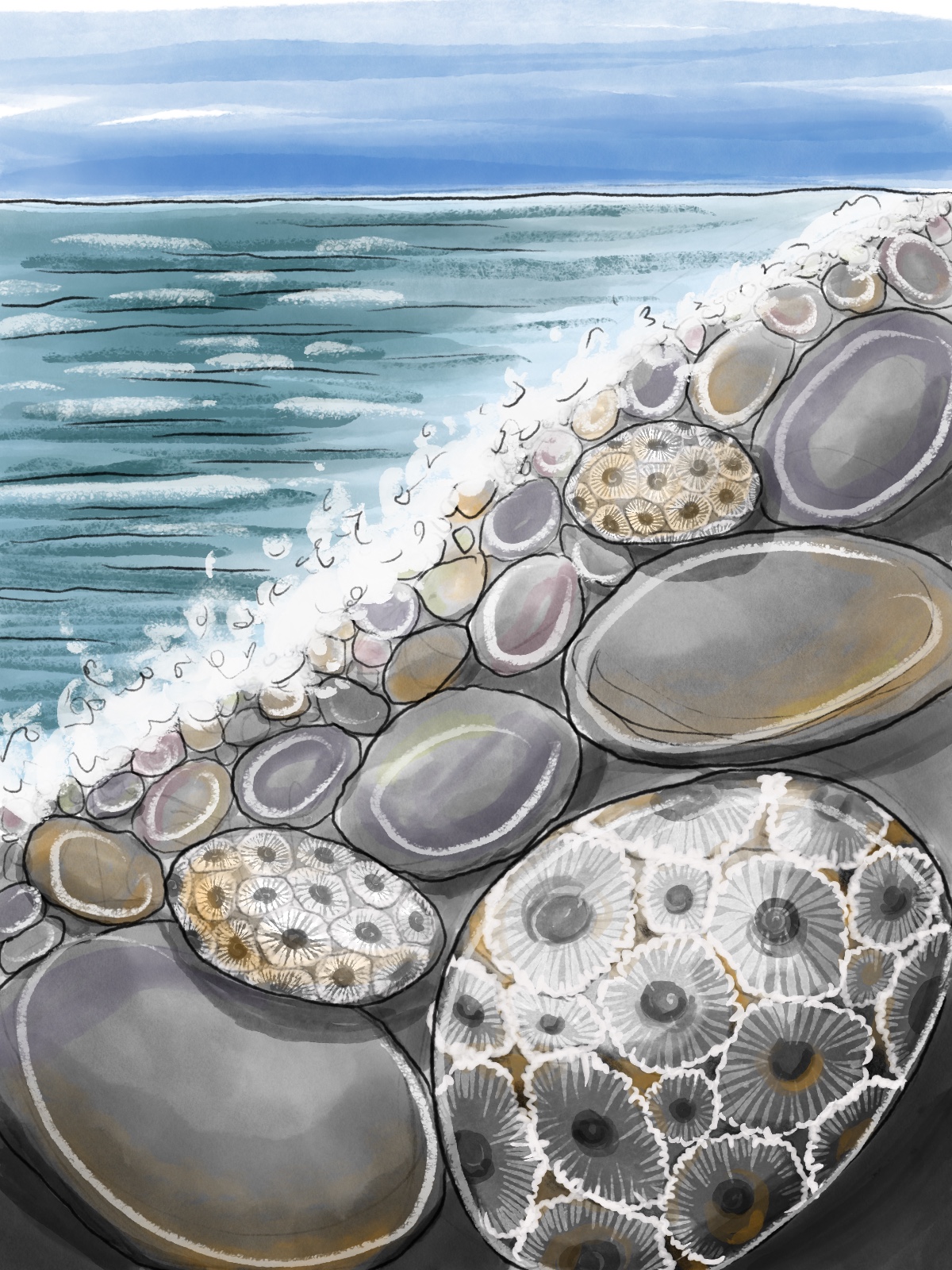
Before the world was big, before Benefit Street and Big Bend Boulevard, before Achilles tendonitis and all the awkward annual apple pickings, before I was worried about mono and mold, I had the impression that every summer would be the same. And that’s because, for a while, they were. We used to drive up into Benzie County in northern Michigan sometime during Gemini season to get some time by the lake. There was the wooden platform under the cottage we’d stay in, home to roots and rodents, a bunker of sorts. The windy bike path around the lake that led to the gift shop full of beeswax soaps and honey sticks. The caramel agate and grey Petoskey stones, freshly tumbled, their patterns like tectonic plates trying to shift around one another. The vacationing family in the next cottage over, whose kids made me a little nervous (they crushed at shuffleboard). When I first came, I avoided the other kids and their pavement games—too much pressure to make a good impression. I preferred skipping rocks and paddling out to the bobbing wooden rafts alone, lifejacket chafing at my neck. By my final visit, I’d gotten brave. The tetherball pole became my purview. It stood at a lean, barely secured under the lakefront sand. But were all those summers really the same? There was the year I came a day late, voice hoarse from the strep throat, digital thermometer and bubblegum pink antibiotics double-bagged in brown paper; another year, with strep again, this time missing out on two days in the cottage. There was the year my dad left early to go to a friend’s funeral, and my mother drove us home at 6 in the morning to get the rental car back on time. I sang loudly to keep her awake, occasionally pinching her cheeks at her request—was I allowed to sit in the front seat that young? I dipped my fingers into a crushed Ice Mountain bottle and touched my cool, wet hands to her temples as she drove through the dark. The first Michigan summer I can remember, when I was five, a golden bee stung the tip of my big toe while I sat in the sand, and I spent the rest of the day inside. It felt like such a waste. Silly me, getting a sting at nine in the morning, before I’d even gotten in the water. I wore hot pink water shoes from then on. I’d look forward to our Michigan trip all year. The state itself became my obsession, the lakefront the setting for each of my daydreams. I thought I’d find true love there by the bonfire. I looked for signs in the face of any sweatshirted teenager who passed me on the beach to see if they saw anything in me. I thought I could swim to the other side of the lake, if I tried hard enough. I didn’t know it was eight miles long. There was another family who overlapped with mine for only one summer, whose toothy twins I continually mistook for each other: Caroline and Kelly. They were nine, I was seven. We’d roast marshmallows together under the stars and try to match the constellations to the ones printed in my well-worn library book. Gemini was barely visible, but we found Ursa Major just fine. The twins rode horses back home in Kentucky. We stayed pen pals for a couple years. Their mother addressed the envelopes with loopy flourishes and big circles to dot each “i”. Their town was one of those hit hardest by the tornado last May. Now the planets have shifted positions a million times over and the shoreline is disappearing and I haven’t visited the lake in nine years. New starscapes, new summers, new lakewater levels. New families at the bonfire, new rodents’ nests under the cottage. But how would I know? So, you see, without the anticipation of the annual trip, without the routine of it, the guarantee of new faces for daydream fodder, the water’s placid constancy, it’s easy to prickle when Gemini season rolls around. No more whistling lakeside breeze for me, just the pitter-patter pattern of the rain on the cement. The tropical levels of humidity haven’t arrived just yet, but they will soon. There will be signs.

Across the Atlantic and Back

Maison Texeira
February 19, 2026

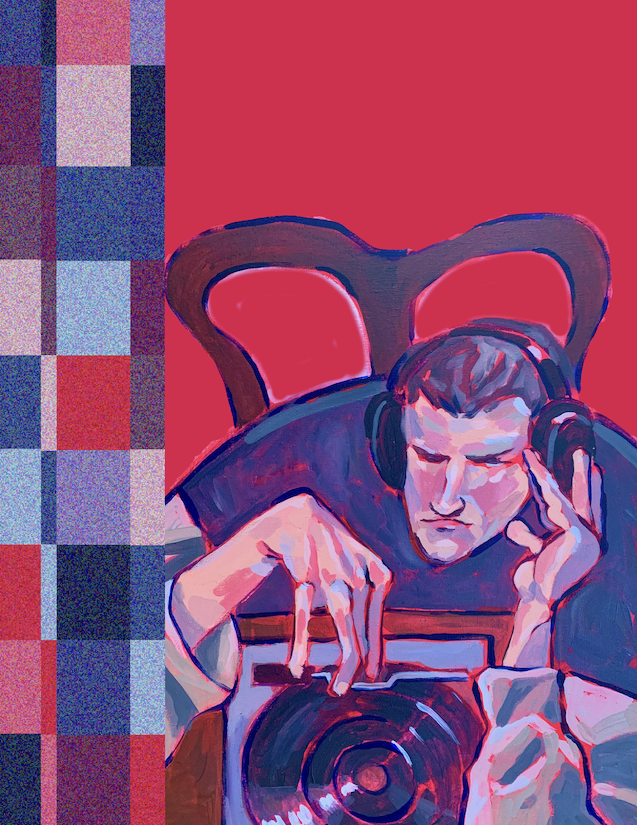
1975. Shirley dreams that she’s at her job, working behind the counter at a small bar called the Devon in the seaside town of Hartlepool, wearing a white T-shirt with a Penny Farthing bicycle on it. A handsome guy walks in with a lovely smile, brown skin, and jet black hair. They talk for a while, until she wakes from the dream. A few weeks later, Shirley sits behind the counter at the Devon, wearing the same white T-shirt, only this time she’s awake. That’s when the man of her dreams walks into the place and asks her for a drink. They talk for a while, until he and his crewmates are called back to the ship, and he leaves to set sail once again. The man of her dreams, otherwise known as Big Manny, comes back to visit Shirley occasionally. Eventually, he makes her a present: a Penny Farthing bicycle made out of nails driven into a piece of wood. She loves it, and soon enough, he comes over to stay with her and the son she’s been raising by herself. They live together, but not really; he’s away most of the time, cooking delicious meals for hungry sailors adrift on the merchant ships. When he’s back home with her, they go to the disco together, boogieing all night to Earth, Wind, & Fire, the Stylistics, and Donna Summer. They’re spectacular dancers; they can do the Bump, the Hustle, they can Rock the Boat, and everything in between. Today, Shirley is still a spectacular dancer, but she tells her grandson that nobody could dance like her husband used to. Her grandson wishes that he’d inherited some of their dancing genes. ~ 1977. Shirley and Big Manny have a child together: a chubby, white, red-haired boy whom they also name Manny, otherwise known as Little Manny. Five years later they have another, a brown-skinned girl with black hair whom they name Maria. They carve out a life in Hartlepool, with Shirley taking care of the kids and Big Manny continuing to live out at sea, coming home for one month out of every year. Hartlepool isn’t always kind to their family, being one of few mixed race families in the town. One time, a boy throws a brick at Maria’s head and calls her the N word, and Little Manny fights back by throwing several bricks at his head and beating him up. Little Manny gets into tons of scraps with other kids, but most of them are with his older brother John, who torments him — and loves him — like no one else. John can beat Little Manny up all he wants, but as soon as anyone else so much as lays a finger on his younger brother, he shows up to break that finger, as well as maybe an arm or two. Little Manny also has many girlfriends growing up, but his first true love, the one he’ll someday meet and bear a child with, is all the way across the Atlantic, in a country he’s never even heard of. ~ 1986. In the third-world metropolis of Belize City, there lives a woman named Vianney who is raising her daughter Melanie and her infant son Sergio. Melanie is a feisty young girl, running around the city with her younger cousin Camille. The city is their oyster, and yet it is also a dangerous place. This is a city where old men carry crocus bags and use them to try to catch young girls, which almost happens to Melanie and Camille one day. This is a city where watching a woman almost drown in the canal is nothing unusual, at least not to the wide, curious eyes of little Mel. And worst of all, this is a city where Tataduende, the dastardly dwarf with backwards feet and a penchant for stealing children's thumbs, is believed to roam from time to time. Melanie often conceals her thumbs within her fists when she walks about. This is a city of peril and poverty, yet Melanie only sees the wonder of it all, especially in the big, gaping eyes of the kittens she and Camille find at the corner store. They bring the kittens back to their great-grandmother Mims, who had asked them to get her some tea bags, not these adorable kittens. Mims explains that Melanie and Camille have failed to consider the fact that they are very, very poor. How are they going to feed these kittens? ~ 1989. Shirley and her family decide to move to the United States of America, on the Northeast coast of New England. That’s where most people who left Big Manny’s homeland of Cabo Verde have wound up, and it’s where his two sisters and most of his brothers call home. Little Manny, Maria, and John all enroll in school, where Little Manny is scolded for staying seated during the Pledge of Allegiance. “I don’t pledge allegiance to this country,” he says to the teacher. They do American things, like going to McDonald’s, where John tells Maria to give him all of her fries because he heard that “McDonald’s supports the Irish Republican Army.” Little Manny makes lots of friends, who come to know him as “English Manny,” and his accent makes him a catch with the girls at his school. He and his friends live on the edge, riding their dirt bikes through abandoned factories and going toe-to-toe with each other in bareknuckle street brawls. Shirley misses England dearly, and later admits to her grandson that she never wanted to move to America. When she returns to her home country for the first time in twenty years, she finds that it’s no longer the England she remembers. ~ 1989 (still). The same year Shirley and her family move from England to the Americas, Vianney and her 9-year-old daughter, Melanie, move from the Americas to England, while Sergio stays behind with his Dad. Melanie is excited, her little Caribbean mind imagines England as the land of fairytales and royalty. When she gets there, there aren’t any fairies, and she doesn’t meet any princes or princesses, but she does find things like clean sidewalks, dentists, rubbish bins, and street sweepers — luxuries that didn’t exist in her home country of Belize. They’ve moved here because her mother has married an English army man, who hits her and calls her names. He is sent to Iraq for months at a time, and Vianney and Melanie savor these months without him. Vianney begins to know England as home, much more so than Belize, which is slowly becoming a much-desired tourist destination for its beautiful sandy cayes. While talking to her grandson many years later, she laments that the Belize she knew as a child is gone, and that the Belize where snotty American tourists spend their winter holidays is not the Belize she wants to return to. ~ 1997. Little Manny, who is no longer little anymore, travels back to England frequently, attending raves where DJs play techno, trance, and house music as a pulsating sea of people dance. At one of these raves, Manny lays eyes upon the most beautiful girl he’s ever seen. Manny approaches the girl and asks her name, which she says is Melanie. They strike up a conversation, and he asks her if she’s seeing someone. She says she’s seeing a guy named Danny… who just so happens to be Little Manny’s best friend. Nevertheless, they form a friendship that blossoms over the years. Manny spends his early 20s living many lives. He lives one life as DJ Synista, renowned in the Providence nightclub scene for spinning techno records that transform empty Brown University halls into living, breathing dancefloors, where college students boogie their cares away. He lives another life in Tenerife, a married life, one that somehow survives for some time after his pet ferrets devour all of his wife Eleanor’s gerbils but still ends in an unceremonious divorce. Eventually, Big Manny’s son moves back to Rhode Island, where he continues his usual escapades with beautiful women — all of whom he completely drops after convincing Melanie to come fly back across the Atlantic to the States, where she’ll live with him. In the meantime, Big Manny takes up work in the restaurant business. He becomes the head chef at Cantina di Marco, a cozy Italian restaurant in Cumberland, RI, of which he will soon become the sole proprietor. He’s finally found a home for his five-star cooking after many years traversing the globe on merchant ships. Cantina di Marco becomes a second home for Big Manny and his family, a second home populated by strangers who come through its double doors to dine, drink, and mingle. These strangers don’t see the inner workings of Big Manny’s crowded kitchen, where chefs toil over stoves and chopping boards, but the savoury flavor of his signature prime rib or his alfredo linguini speaks volumes to the culinary brilliance hiding behind the kitchen’s swinging doors. ~ 2025. Manny and Melanie are no longer together, but they have an unbreakable bond that’s lasted twenty years and looks a bit like both of them, with his mother’s hazel eyes and his father’s round head. Their son, Maison, was once a wide-eyed little boy with an afro, sitting on his father’s knee as Manny recounts the moment he met his first true love. Now, he’s a young adult, carrying the stories of his parents and their parents with him wherever he goes. His grandad, Big Manny, lives on in his memories. He remembers Cantina di Marco as though it never closed down, remembers sitting in a trolley with a big grin on his face as Big Manny pushed him around the parking lot, remembers chilling at home with Big Manny as they munched on bananas and pretended to be monkeys. As a young adult, Maison will one day find himself writing a creative nonfiction piece about how his family came to be. He will write this piece in his now-retired grandmother Vianney’s back garden as she reminisces in the kitchen with her daughter, laughing about Melanie’s escapades in York. He will write this piece while sitting next to his mother Melanie and asking her what her life in Belize was like. He will write this after having spent several weeks with his father Manny, who’s back in England after all these years, now living happily with his second love Chantelle. He will write this for his family, a family which is, quite literally, beyond the wildest dreams of a young English girl working at a bar in the quiet seaside town of Hartlepool.

In Memoriam Iuliae

Luca Raffa
February 19, 2026

In Memoriam Iuliae I It was a late afternoon during mid-March in Toronto. I remember the grey clouds brought rain-drops, and puddles, and stillness into the world so as to reflect the quiet miseries and mysteries of life. Gloom hung in the stench of the muggy air and clung to the back of my mind. The heavy lake clouds acknowledged our melancholic mortal condition and the curse of suffering we each bore as trespassers in the ailing world. The indifferent pour of rain and the growling roars from above prophesied tragedy. Beauty was melting. Beauty, like the way the golden sun loved the sky, was as brief as perfection and drowned in tempests. Yet beauty was also like the fleeting touch of calm rays, the emerging yellow after misery. I was six years old and did not understand neither misery nor beauty. She was sleeping peacefully on Mom’s lap, Dad beside her, Gabriel and I sitting on the floor. Mom said that her heartbeat did not rhyme with its usual rhythm, and she soon lay as heavy as marble in her lap. Mom was so young. She sent me and Gabriel upstairs to wait, and we watched in the dark as blue and red lights brought us to the windowsill. An ambulance arrived, and I remember the funeral smelling like lilies. II I could never understand you. All you could say was ma. The thoughts which you could not speak would rupture into your violent yell, but your hands tried speaking to me a million words: you would put your hand to your mouth as if to blow a kiss, as if to say I love you. I wish you could have seen the smiles on my face. You were rough and free and would rock back and forth in a trance, shattering ice or a glass cup on the living room floor when you were happy. I remember you as biting, vomiting, and moaning. But you were also the clink and clatter of keys which you would jingle and the glow of carols on your radio—you were the scratches on those CDs. You were laughter when Mom read Robert Munch’s picture books, the hums of Silent Night, and the sweetness of cream of wheat, the things which you loved most. You were the familiarity of the green couch and drowsiness. I remember you as soft blankets, pink sweatshirts, and stretchy hair-ties. Your long, black hair was wild against the stillness of your cold white hands. You were syringes, and medication, and wheelchairs—the nurses’ only patient. You were never-ending doctor’s visits and hospital visits, Christmases that brushed against death, the numb headaches and tears of your loved ones. You were youth, and joy, and beauty, and sickness, and misery, and death. You were my confusion. III Mom and Dad fled the life where Julia lived for sixteen years and brought me and Gabriel to America, this continental haven where families could be reborn. Time kept me away from the places of the past, and the vividness of Julia’s memory rusted inside me. I would begin to forget her. But her presence would never leave me. At the bottom of the eighth inning of my first Red Sox game, the happy crowd’s chant bum bum bum resurrected Julia: the memory of a happy little girl on her father’s lap singing Sweet Caroline appeared in my mind and wet my eyes. This pleasant twinge of Julia’s memory in my heart comforted me, though. Today when I feel this strange tickle and think about Julia’s story, I remember that I have witnessed a miracle. In her short life, Julia illuminated beauty and defied the weary miseries of the world. As a proud brother, I am compelled to follow this light and to seek beauty in the world.

Trends: A Sole Collection

Lucy Kaplan, Juliet Corwin, Riley Stevenson, Elsa Eastwood, Ava Satterthwaite, Annabelle Stableford, and Anika Weling
February 12, 2026

In my youth, a jar of pickled herring claimed the back right corner of the fridge. I can’t quite point to my father’s Jewish ancestry as the reason; it seemed more of a personality quirk that compelled him to crave tangy fish on a seeded cracker before his three o’clock nap. My brother and I followed suit, curious eaters tempted by scores of gefilte fish and gravlax at break fast, Passover, and the occasionally attended Saturday service. On weekends, we grabbed bagels with whitefish from Lenny’s, a half-decent deli we remained loyal to for the name it shared with our late grandfather. Not the finest in the city, but every New Yorker knows that the best sandwich comes from the place around the corner. After our westward relocation, my appetite persisted. No longer able to race down the stairs and across the street to satisfy my hankerings, I stacked the cupboards with tinned fish of my own choosing. Smoked sardines in olive oil, thinly filleted mackerel, salmon preserved with lemon—a hazy ode to New York winters gone by. Salt and sour clung to the walls of our kitchen, reminiscent of the mom-andSole ME copy 25 copy (3).inddc 14 trendy to forget to eat. Somewhere around fifth grade, I think. pop shops we once frequented. This one, our own. When I left home, I folded my f ixation into my suitcase—not a trend, but a history. I etched a pair of salmon onto my upper thigh, drawn with a dark ink that felt like blood. A finelined reminder of Passover and Grandpa Lenny and my father’s pickled herring. Last month, I remember in health class, how my teacher told us about thigh gaps and how to check if we had them. After class, a group of us stood in a circle, touched our ankles together, and prayed for emptiness. We’d skip meals and then skip SILENT HUNGER WAS THE LANGUAGE OF THE STRONG. “ ” JU LIET CORWIN I stopped dead in my tracks at a familiar crosswalk in New York. There it was: the closure sign in Lenny’s window, dated two years prior and peeling at the edges. My stomach roiled as the word imposter came to my lips. I was sulking in a city that held my past and escaped my future. That same week, my father sent me a pair of winter boots, a tin of smoked f ish stuffed inside the left footbed. Somehow, he knew I was mourning. Sweet Girls By Juliet Corwin I try to remember when it became 14 rope during recess. When we got lightheaded during P.E., we’d lie and say we had cramps. (Most of us hadn’t started our periods yet.) When our bellies grumbled in class, we’d pretend not to hear it. We’d look at magazines of flat stomachs in low-rise jeans and poke at our pudge. We bragged about how long we could go without eating. We’d sneak chips and cookies when the others weren’t looking and hope the crumbs didn’t leave a trail. To eat was to be weak. We couldn’t give in to the gnawing. Silent hunger was the language of the strong. It became honorable to ache for food, a rite of passage into the womanhood we so desperately awaited. 11/26/25 4:46 PMAnd nothing could taste as good as skinny felt, right? I remember the shame that blushed at my cheeks after I caved and ate the pasta and chicken that my mother had lovingly cooked for me. On-Campus Observations From An Off-Campus Oyster Farmer By Riley Stevenson To be on a college campus is to be surrounded by trends. Spend fifteen minutes on the Main Green and you’ll see a dozen micro-trends, some here to stay and most bound to disappear into the backs of closets; new accessories worn in creative ways over ever-lowerslung jeans held up by a kaleidoscope “ HIS WORLD IS ONE OF SALT, FROST, AND FIREWOOD, OF WEARING THE SAME MUDCAKED SWEATSHIRTS TO WORK AND SEEING THE SAME FLEECECLAD OLD PEOLE IN OUR SMALL MAINE HOMETOWN. RILEY STEVENSON of belts all turning to dust. My boyfriend is an oyster farmer from a small town in Maine. His world is one of salt, frost, and firewood, of wearing the same mud-caked sweatshirts to work and seeing the same fleece-clad old people in our small Maine hometown–a life without much room for personal expression through trendy clothes. Observing the trends of our campus is his favorite activity when he comes to visit. He walks into the Blue Room, sympathetic to all of the college students hunched over their laptops, buys a coffee, and sits on the terrace overlooking the Green, noticing. As a freelance journalist and astute business landscape rendered big bands unviable. It died again in the 60s, when bebop became esoteric and cerebral, a “musicians’ music”. Young people wanted to rock instead of think. It went out with the Old Guard—with observer of the human condition, he is uniquely primed to note and catalogue, dedicated to his craft of perceiving what has changed since he last stepped foot on both this and his own college campuses. After I am done with class “ he barrages me with questions and commentary about what he’s noticed, like an off-duty WE MAY TALK OVER IT AT COCKTAIL PARTIES, LET IT WAFT OVER OUR HEADS IN ELEVATORS, BECAUSE WE, LIKE THE YOUTH OF THE 60s, HAVE ENOUGH TO THINK ABOUT. WITH MUSIC, WE SCROLL AND SKIM SURFACES. anthropologist, notebook in hand. He is excited, irascible, brimming with observations, seeking confirmation, ever-excited by his day’s work.“Does anyone here use a backpack anymore? Could the jeans get any baggier? Do you think anyone wants to buy my pre-paint stained Carhartts?” I shake my head at him and laugh, knowing the questions are the fun part, their ” answers irrelevant. We walk through the Green hand in hand as he tells me about his findings. I marvel at the ELSA EASTWOOD ” Armstrong and Ellington, Billie, Dizzy, and Dexter—and again with Bird, Monk and Miles, with Wayne and Coltrane. They say we’ve succumbed to the musical Big Mac of commercial pop, and not even Wynton Marsalis can bring us back. I believed them. Then last year, I won a ticket through an Arts Institute lottery to see Jon Batiste in concert. I never win anything on that website. I knew him only as the bandleader on The Late Show, but I had to go. Arriving at the venue just before 7pm on a Thursday, I stepped past a nauseatingly long standby line of fans clutching setlists and trading deep-cut references with fervor. I recognized some from my music theory courses and offered a few guilty waves over worlds we occupy, the observations that allow us to see how others see their world, how lucky I am to share this world with someone as thoughtful and observant as he is. Jazz is Dead By Elsa Eastwood They say jazz is dead. It died first after World War II, when a changing 15 my shoulder as a woman scanned my ticket. I chose a seat in the very front, just beneath the grand piano—the piano on which my jazz hero would perform a reharmonized “Star Spangled Banner” unlike anything I’d heard. His expansive fingers stretched across the keys like vines, entwining gospelinflected voicings with modal color, face contorting in testimony. His was a music of lineage and remembering, pain and power, the improvisatory human experience; a music that traverses valleys and wades through Sole ME copy 25 copy (3).inddc 15 11/26/25 4:46 PM“That’s the trend, Mom.” rivers, moving through space and psyche. It was sacred and lyrical, percussive and raw. Creation and truth-telling unfolding in real time. The arrangement lasted 15 minutes. Standing with the crowd, hand to heart, I soon shook with tangled sobs of peace, joy, and heartbreak at what felt like the most perfect convergence of sound and history. The old and patriotic, broken open in one trembling instant. I say jazz is alive. It’s adapting to a changed landscape, vivified by its own endurance, shedding its skin in the dark. It emerges between genres like a ghost in the machine. We may talk over it at cocktail parties, let it waft over our heads in elevators, because we, like the youth of the 60s, have enough to think about. With music, we scroll and skim surfaces. But if allowed, it will instruct. It will wait for us to remember how to listen. It will continue to send messengers to remind us that, bruised but dignified, it still pulses beneath the noise. The Chronicles of the Traveling Pants By Ava Satterthwaite The first time I asked to borrow my mother’s bell-bottoms, her face “ STILL, IN THOSE BELL-BOTTOMS LIVE FIELDS OF HER ROSE AND LAVENDER FRAGRANCE, DENIM THREADS INTERWIEVING LIKE STRANDS OF HAIR SHE’D DUTCH BRAID BEFORE BED. AVA SATTERTHWAITE scrunched in disbelief. “That’s the trend now?” she asked, befuddled. I never wear them, of course – the tide of the trend shifted long ago. Still, in those bell-bottoms live fields of her rose and lavender fragrance, denim threads interweaving like strands of hair she’d dutch-braid before bed, silhouettes of her twirling between twill ruffles like we’d dance in the kitchen to “Better Than Revenge” and “Fearless.” All around me are reminders of adolescence. Pink bow UGGs mellow into classic tans. Black puffer vests I followed her to the attic, where we coiled between stacks of doodle-laced notebooks, faded letterman jackets, and clusters of swollen crates— one labeled CHRISTMAS DECOR, another RECORDS + CDs, a third DENIM. It was like Narnia – an entire world of memories hidden behind her wardrobe. She found the bell-bottoms under a mound of distressed overalls and low-rises and threw them over her shoulder. Snickering, she asked if I’d like a flower headband or some fringe boots to finalize the look. But, as I stood in the mirror, smoothing the creased flares and fiddling with the waistband, a tear skimmed down her cheek. “That’s the trend?” she echoed, voice faltering. I nodded. “It’s just like I remembered.” ” When I came to college, my mother snuck those bell-bottoms into my suitcase as a farewell, her scribbled note stuffed between its folds. Call Your Mom! it insisted – like I’d need the reminder. Frankly, the further I wander from home – from childhood – the more striking our resemblance becomes. I listen to “Landslide” with such reverence it feels biblical. I add crushed Kellogg to my cookies “for some crunch” and dark chocolate chunks “for the bite” like she advised. I drink iced Sauvignon Blanc and shake my leg so excessively the whole table wobbles, its steady thrum reminiscent of our once shared dinner table. I never considered my s e l f sentimental until I rediscovered her bell-bottoms looming in the recesses of my dorm-issued wardrobe. 16 overtake matted lime-colored North Faces. Like my mother, I’ve been fossilized over and over, my fleeting memories buried beneath old boxes and new clothing, my own forsaken Narnia. The trends, timeless and teenage-dirtbagish alike, fill these archives with precious evidence of our evolution. I grab the bell-bottoms and look toward a clouded mirror. I’m much older now: cheekbones more defined, brows furrowed tensely. The denim is stiffer now, too. It holds me a little tighter, and I think warmly of my mother’s arms. It’s just like I remembered. Merriam-Webster By Annabelle Stableford trend noun a : a line of development : approach b : a current style or preference : vogue c : a general movement : swing d : a prevailing tendency or inclination : drift Approach: To identify three intrigues: two trends of my life, and for fun, a not so subtle trend that consumes me, which you may discover hidden throughout this text (although I am no mastermind). Vogue: So it goes, it is not in vogue Sole ME copy 25 copy (3).inddc 16 11/26/25 4:46 PMbe in vogue, nor am I in vogue. But I persist. Swing: According to my memory, everything that ever happened to me happened when I was eight. There were troubled nights and tears culminating in the visit to the energy healer, who proclaimed me a blind farmgirl in a previous life (that escapes me as well a pendulum now, coming back in crisis to explain everything). And the drunk man at the natural hot springs and the woman who told me to look away, to imagine his image washing away in the river (except “ Quarantine Trends By Anika Weling It’s sad to think of what I will say when my children ask me what I did during the COVID-19 pandemic, the most prominent event of our generation. I wish I could say I did anything useful. I could lie and say I helped save lives or protect rights, but in reality I sat in bed for months on end, fixated on a little LED screen I REFUSE TO FORGET MY LIFE: THE SHARPNESS OF WORDS, THE KIND THAT ONCE YOU READ THEM, THEY HARBOR WITHIN YOU. eight inches from my face. I listened to the distant hum of the news from my living room, an ominous loop of ANNABELLE STABLEFORD every time I try, the current reverses). And when I read Tuck Everlasting and in the story discovered a profound magic all for myself (novels, within my realm of independent reading now!). Ex. “You have a favorite spot on the swing set / you have no room in your dreams for regret.” 1 Drift: “Pulled him in tighter each time he was drifting away.” I refuse to forget my life: the sharpness of words, the kind that once you read them harbor within you; the ten hardboiled eggs I watch someone eat at breakfast, all in one go (perhaps not profound, but noteworthy); the things that happened to me when I was eight and in all the eras after. All of this goes into my Volumes, my Immortal Histories, my Moleskines (2019-2024) and Leuchtturms (2024-present), my most critical trends. I don’t let any of it drift away. Ex. “Pulled him in tighter each time he was drifting away.” 1 ” muffled, monotonous voices with nothing good to say, so I hid under my covers. I watched video after video on how to make dalgona coffee, while hating coffee, and how to 1 Attribution of quotes (spoiler warning): Taylor Swift do Tiktok dances, which I had no desire to ever learn. I saved DIYs and recipes to a folder, only to never look at them again. Propped up in bed, I took online classes while the world fell apart around me. The numbers rhythmically continued to climb. One million. Two million. Ten million. No one ever taught us what to do in the case of a pandemic. No one thought we would need to know. So in the utter chaos around us, we turned to distraction to survive, to escape. Never-ending entertainment f lashed passed us as we chased a relief we could never quite reach. We fell into rabbit holes where we never had to stop and realize what our lives had become. It’s trend, after trend, after trend. Around me, everything is still, everything is quiet.

Casio's Avocado

Miya X Wu
February 12, 2026

Suppose you exit the parking structure at Westfield UTC in San Diego and walk towards the open-air atrocity, filled with more options for oatmilk matcha lattes than are good for your sanity. In that case, the first thing you will see is one of the two Lululemon locations in the mall (really?). Ignore it, turn right. Not far away, a pink circular sign waves from the wall, the silhouette of a man in a newsboy cap looming over a cup of coffee, offering “Joe & The Juice.” The interior of the shop is on the darker side, a similar atmosphere to that millennial-run burger joint that serves its overpriced truffle fries on fake newspapers. The menu offers smoothies and juices whose names give you not a single hint of what you are ordering, except maybe the color of the beverage. This leaves the cashiers entertained as the queue of squinting customers try to read the ingredients in tiny print under names like “Iron Man” and “Prince of Green,” their eyes occasionally widening at the right side of the menu. On the walls are framed quirky posters like “I just saved some wine, it was trapped in a bottle” and “more espresso, less depresso.” One of the many posters humorously comments on the human encounter with avocados: “too soon… too soon… too soon… NOW too late…”, referring to the universal pain of finding your morning avocado, which you’ve been looking forward to all night, disturbingly squishy—even though you could’ve sworn attempting to cut it yesterday afternoon almost chipped the knife. On my left wrist, there is a permanent white band, a mark left by the joint effort of the sun and my Casio Baby-G that mom got me when I turned twelve. Its watch band is now off-white from the five years of weathering, with faint, darker spots on it from that one time I helped my mom dye her grey streaks black. That avocado on the poster from Joe & The Juice seems to have gotten itself a little too acquainted with my watch. Every tick of a handle, every tock of the gears, seems to smear that damned fruit into every uncleanable crevice of the machine. The rose gold watch face and its hidden surfaces are painted with a filthy green explosion of nostalgia, filling every unoccupied moment with the remnants of something that used to promise a great avocado toast. So unruly this fruit that its colors seem to bleed onto nostalgia itself, contaminating it with its bad habit of causing untimeliness. Nostalgia is the only word a writer can really put on it. The persistent state of “missing.” The endless cycle of living in the past and the future, but somehow never the present. You look forward to something about to happen, forgetting to look at the ground at your feet. You pick up an avocado hoping to make guacamole, only to find it hard as a rock with anticipation for tomorrow’s day, not quite fit for making guac, so you leave it in the fridge. That same afternoon, you return to it with the new idea of slicing it and putting it on toast, only to find it has become too mushy to be sliced, so you leave it on the counter. The next day, you return to it to finally cut it open, and find that it is too mushy for anything at all, with dark spots crawling on the light green flesh. So then perhaps the mythical “prime” of this devilish fruit doesn’t exist, the “present” an elusive thing before it becomes nostalgia. I want a perpetually solid avocado to fulfill all of my slicing needs, and another forever mushy one for on-demand guacamole. I know I can’t have that. They haven’t even made GMO avocados that do that yet. So what then? So what if you’re looking forward to something that’s yet to happen? Something is happening right now for you to miss later. So what if I lost my watch the first month of my freshman year in college? Its reliable mechanics have gotten me this far, and I have nothing but good memories and a sweet few chapters of my story with its rosy reflection glimmering on it. So what if something has already happened and you feel sickening butterflies upon its absence? At least you once had something beautiful enough to cause this colorful affliction. So what if my guacamole is a little chunky because the fruit was unripe? So what if my order of avocado toast is a little mushy because the fruit was too ripe? Before it gets rotten and you have to trash it six feet under, eat your avocados.

Thanks for browsing!

JOIN OUR MAILING LIST!

Thank you! Your submission has been received!
Oops! Something went wrong while submitting the form.