

One summer afternoon – I was maybe six – my family had made the few hours car ride from Toronto to visit a friend in Guelph, Ontario. Urbanism sprawled from cornfields to meadows to the thick pine forests. The trees muffled the bustling highways of rural Ontario and tinted the blue lakeskies. The heavy leaves from the canopy shunned civilization. I was blind and deaf as I emerged into the womb of nature.
Laura Mishko kept to a cottage tucked deep within these woods. She had met my mother a decade ago at their office job, and now they had been friends for several years. The Bird Whisperer – David was his name, but I did not think of him that way – was her lover. The Bird Whisperer was a tall Scottish man with a belly, rotting teeth, and drunken eyes, although his demeanor was soft and his intentions were kind. Laura and the Bird Whisperer never married – he seemed more engaged to birds. He kept dozens of feeders on posts and widows throughout the cottage yard, filling them fresh every morning. The birds came to him every day.
During the visit, while my mother stayed inside, I waddled about the cottage yard in search of wonder. The forest trilled and ruffled with birds drawn to blossoming cornucopias of seeds hanging from the feeders. Humble chickadees hid among the pines, their tiny beaks biting sunflower and safflower seeds open, blue jays screeched at each other argumentatively, round juncos pitter-pattered along the underfoot of the forest floor, and chatty gold finches congregated at nyjer feeders. Their colorful, quick movements under the sky tempted my eyes, while their voices tickled my ears with delight.
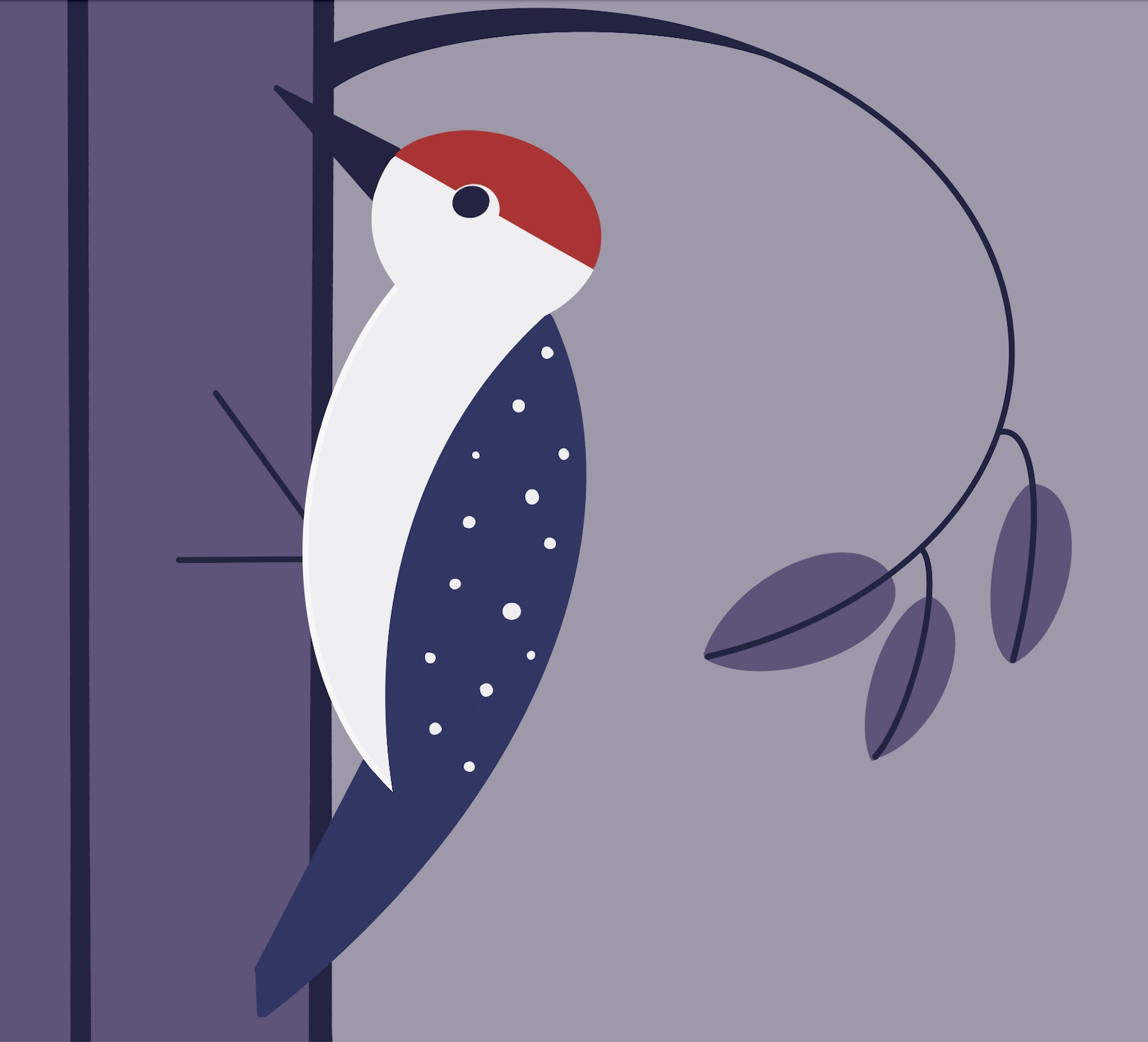
In the following weeks, I hung my first bird feeder on a short purple tree in the backyard. My mother bought it for me. White-crested nuthatchers, house finches, sterlings, mourning doves, and even stingy squirrels often came. I offered my oblations in tubes, hoppers, and trays. The Bird Whisperer had invited me to cherish the magic of the birds, and I now began to adore them. And one day, the wafting stink of the peanuts I left inside a feeder brought a shy woodpecker. It would swoop through the air and arrive at the feeder nervously, exposing its white underbelly and shuffling its claws to adjust its gaze on me. As it pecked at the dry shells, the woodpecker watched me. I stood in the frame of the window watching it too. It seemed as if we noticed one another and, in turn, confirmed one another’s existence. I often waited alone in the window – sometimes for hours – ready. I cherished the woodpecker’s stays, however brief they were. I would smile as it disappeared into the purple skies leaving me only with a trace of its feathers.
Soon, in the following months, my family abandoned our warm, suburban nest in Toronto for Boston, a city that glimmered like a coin. Here, sparrows, seafaring seagulls, and city pigeons, like us, made the trash-ridden, fume-ridden, tumultuous, grey, and brick city their home. They were not the endearing visitors of my childhood backyard in Toronto. Here, city-life conquered nature and the urbanites drew my gaze. The attentiveness I once paid to birds faded; my curiosity, instead, shifted towards human beings. I watched the polished men in their business coats mumbling their worries on their phone walking briskly on top of the disgruntled and tired men with blank and eroded faces mumbling their worries to themselves, backs to the concrete sidewalks. I watched as cars raged across avenues and cussed each other with their aggressive horns, funeral processions, and police chases. Husband and wives, siblings, and strangers bickered. On Sunday mornings, the pub-filled streets lingered with the stench of vomit from Saturday night. Even the young wanted to forget about the misery of mankind.
In the muck of winter or the blaze of summer, I might find myself with my family wandering through the Boston Public Garden or Boston Common to get someplace. On occasion, I might encounter a red cardinal, a blue-jay, or woodpecker. These rare moments represented the remaining fragments of my childhood consciousness, where the marvelousness of nature still belonged. Sometimes I would close my eyes and imagine wings opening from my shoulder blades. I wished that I could fly back in time and soar like wonder, indifferent to the unimagined and dull human-world I was inside. Although I remained a foolish adolescent in the park, I was satisfied knowing that a perfect world still existed beyond the window of my memory.